The Galapagos Islands are one of the world’s most spectacular Eden’s of biodiversity. This archipelago is formed of a set of thirteen islands of volcanic origin and more than a hundred islets and rocky outcrops. The Galapagos is a Natural World Heritage Site and Biosphere Reserve, it is known to be the center of the observations and studies of Darwin’s for the development of his “Theory of Evolution”.
These diverse volcanic islands are full of mystery and beauty, the wildlife along the Galapagos is endemic to this area and really shows how diversity comes together to create fauna and flora that only exists here. Exploring them is a dream and will forever impact how you see the world. Island hopping one of the easiest and best alternatives to visit the Galapagos Islands, this allows you to visit sites that spark your curiosity the most and witness the amazing and special wildlife.
Why is Galapagos so special?
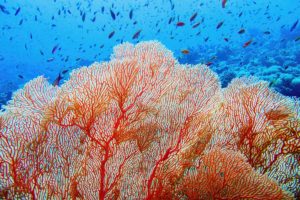
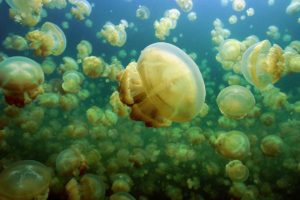
Its exotic landscapes do not resemble other islands of the Pacific at all, they are comprised of huge lava fields, rock formations, cactus forests and volcanic cones, the temperature is quite arid. And this is exactly what makes this uninhabited place seem like it is from another time and planet. Under the sea, there are underground craters and coral reefs, where an extraordinary biological diversity is present. So much so they are also considered one of the seven underwater wonders of the world and one of the most fascinating places in the planet to perform deep sea diving.
We will share the rich history of the islands with you, both the geological and natural. One of the first stops is a visit to the Charles Darwin Research Station, this research facility is full of an extensive collection of preserved plant life along with the renowned breeding center. Here you will encounter giant tortoises, land iguanas as well as numerous birds and plant life. Also on the ittinery we will visit many of the neighboring islands, each one it’s own eco-system and home to unique animal and plant species. We will spend plenty of time in the water, exploring the beautiful and wonderous scenes and observing wildlife at it’s finest.
Experiencing the Galapagos will strengthen the bond between you and nature. The islands are a very unique place, and when you discover them, it is hard to forget your experiences there.